Madrid de los Austrias is best understood as a sequence of civic and royal spaces rather than a list of façades: begin at Plaza Mayor, step into Plaza de la Villa, follow Calle Mayor toward Almudena and the palace, then return through Plaza de Oriente or the lanes around San Miguel.
Affiliate disclosure: this independently researched guide contains a clearly labelled booking option. The advice remains useful if you book directly or do not book at all.
QUICK ANSWER
Allow half a day and choose only one major interior
The self-guided route takes about two hours of actual walking and looking, or four to five hours with the Royal Palace, Almudena dome, San Francisco el Grande or a long lunch. Trying to enter every church and monument weakens the historical thread. A guided walk adds context about the Habsburg court and changing city fabric, but the outdoor route is fully useful on its own.
At a glance
| Start | Plaza Mayor or nearby Puerta del Sol. |
|---|---|
| Finish | Plaza de Oriente, with an optional loop back through Mercado de San Miguel. |
| Walking | About 2–3 kilometres, depending on detours and the return route. |
| Ideal duration | 3–5 hours with one major interior and a food stop. |
| Accessibility | Central streets are mostly paved and pedestrian-friendly, but slopes, cobbles and historic entrances vary. |
The Habsburg Madrid route at a glance
Start in Plaza Mayor before the central arcades become busiest. Exit toward Calle Mayor, pause at Mercado de San Miguel only if you want food, then enter Plaza de la Villa. Continue west past historic façades toward the Almudena Cathedral and the Royal Palace. Finish in Plaza de Oriente, where the open space makes the relationship between palace, theatre and later Bourbon Madrid easier to read.
The route is not chronologically pure: later buildings stand on Habsburg foundations, and the present Royal Palace replaced the Alcázar after the 1734 fire. That overlap is the point. Look for changes in street width, materials and ceremony rather than trying to label every building as “Austrias.” A paper or offline map helps in the lanes where phone positioning jumps between tall façades.
Plaza Mayor: begin with power, trade and public spectacle
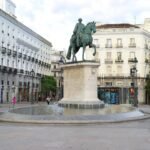
Plaza Mayor took its monumental form under Philip III and functioned as market, ceremony ground and stage for public events. Walk under more than one arch to see how the enclosed square connects with the older commercial streets. The painted Casa de la Panadería dominates the northern side, while the equestrian statue gives the open centre a royal focus.
Visit early for clean architectural lines or later for atmosphere, but do not mistake terrace seating for the only way to use the square. Prices are generally higher on the plaza itself. A calamari sandwich nearby can be part of the tradition without becoming a compulsory checklist item. Keep moving into the side streets, where the city’s scale changes quickly.
Plaza de la Villa: the most useful architecture stop
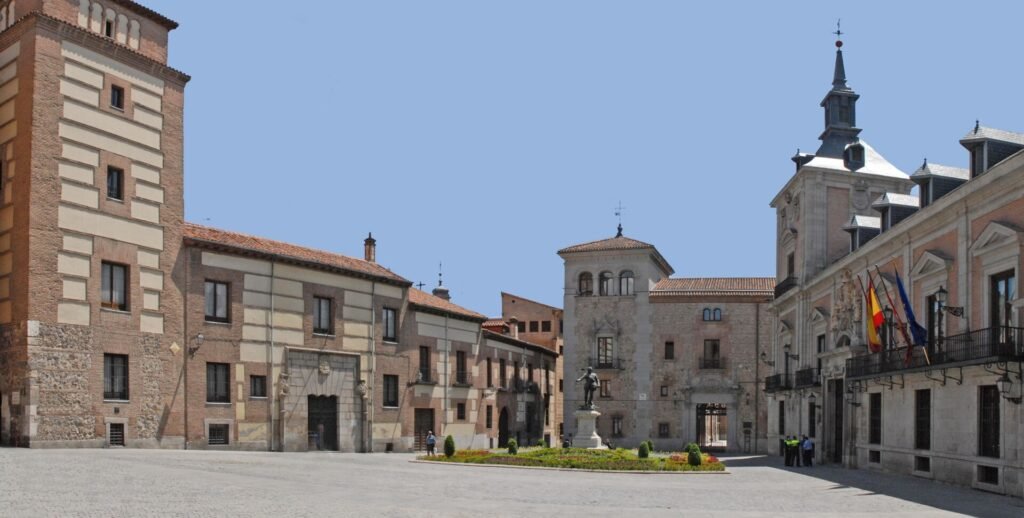
Plaza de la Villa brings several centuries into one compact view. The Torre de los Lujanes preserves a late-medieval character, Casa de Cisneros shows a different noble language and Casa de la Villa represents the city’s former municipal power. Stand near the centre and compare windows, rooflines and stone rather than photographing each façade in isolation.
Because the square is small, guided groups can fill it quickly. Step to one side and let residents and workers pass. Interior access is limited and event-dependent; the outdoor ensemble is the main reliable experience. From here, Calle Mayor continues naturally toward the cathedral and palace while side lanes lead back toward San Miguel and the oldest commercial core.
Almudena and the Royal Palace: later monuments on an older site
Almudena Cathedral is much newer than the quarter around it, while the Royal Palace belongs to the Bourbon rebuilding that followed the Alcázar fire. Include them because they explain continuity of the royal site, not because they are Habsburg buildings. The cathedral’s orientation and pale exterior respond directly to the palace across the open court.
Choose one interior. The Royal Palace requires a substantial ticketed visit and security time; the cathedral is easier to enter around worship, while its museum and dome use separate access. If you have already read the dedicated palace guide, spend this walk on the urban sequence and reserve the interior for another morning. Check official closures for ceremonies and state events.
Guided walk or self-guided route?
A self-guided walk works when you enjoy architecture and can read brief background before each stop. It offers freedom to enter a church, pause for food or leave when crowds increase. A guided walk adds the political relationships, vanished buildings and stories that are difficult to see in stone. It is most valuable early in a Madrid trip, before later visits to the palace and museums.
The linked walking tour receives strong recent feedback for engaging historical explanation and practical local tips. Some travelers prefer more movement and less standing at each stop, so check the duration and route style. Wear comfortable shoes and bring a layer: a group may remain in one shaded square longer than an independent visitor would.
Live availability
Check historic Madrid walking-tour availability
Choose a date, then confirm the live route, language, group size and meeting point.
Affiliate booking: GoTripSteps may earn a commission if you book, at no extra cost to you. Availability and prices are supplied by GetYourGuide.
Plan a food stop without turning the route into a queue
Mercado de San Miguel is visually striking and convenient, but it is a polished food hall beside a major attraction, not a neighborhood produce market. Walk through, compare stalls and buy only what genuinely appeals. For a seated meal, move toward the side streets, La Latina or Barrio de las Letras rather than assuming the most visible terrace is the best option.
Chocolate and churros, calamari sandwiches and old taverns all fit the district, but completing every food tradition in one afternoon is unnecessary. Choose one. Check menus and portion sizes before ordering, and ask about allergens. The route should still make sense to a visitor who buys nothing beyond water; commerce supports the walk, but does not define its value.
Accessibility, timing and respectful walking
The route includes pedestrian areas but also slopes toward the palace, cobbled sections and crowded pinch points around San Miguel. Wheelchair users can follow most of the outdoor sequence with route adjustments, while historic interiors require individual checks. Begin early, use Plaza de Oriente for seating and avoid combining the walk with a long palace queue during the hottest afternoon hours.
Keep group conversations away from doorways, and remember that small plazas are residential and administrative spaces. Religious buildings may close for worship even when a tourism page lists general hours. Dress appropriately for church entry and lower your voice. The oldest centre is rewarding precisely because many different uses still coexist within a compact area.
VERIFIED-BOOKING THEMES
What recent travelers mention
- Engaging guides and clear historical storytelling are the strongest recurring themes.
- Many travelers appreciate practical food, bar and neighborhood recommendations alongside the history.
- Some visitors would prefer a brisker pace with less standing at individual stops.
These are recurring themes summarized from verified-booking feedback visible on the linked GetYourGuide product page on 2 November 2026. They are not quotations, a site endorsement or a substitute for checking the newest reviews.
Frequently asked questions
How long does Madrid de los Austrias take?
Allow about two hours for the outdoor route or three to five hours with one major interior and a food stop.
Is the Royal Palace part of Habsburg Madrid?
The current palace is a later Bourbon building that replaced the Habsburg Alcázar after the 1734 fire. It remains essential to understanding the royal site.
Can I walk Madrid de los Austrias without a guide?
Yes. The squares form a compact self-guided route. A guide adds political history, vanished buildings and context that is not always visible.
Where should the walk start?
Plaza Mayor is the clearest start. From there, follow Calle Mayor to Plaza de la Villa, Almudena and the Royal Palace.
Continue planning Madrid
Plaza Mayor detailed guide · Royal Palace visitor guide · Temple of Debod sunset · Food near Madrid attractions
Official planning sources
Opening hours, access rules, exhibitions and transport arrangements can change. Recheck the linked official source shortly before travelling.