The best first visit to La Latina begins before El Rastro reaches peak density: arrive near Plaza de Cascorro before 11:00 on a Sunday or public holiday, explore the side streets as well as Ribera de Curtidores, then move toward La Latina’s squares for a late aperitif or tapas lunch.
Affiliate disclosure: this independently researched guide contains a clearly labelled booking option. The advice remains useful if you book directly or do not book at all.
QUICK ANSWER
Treat El Rastro as a neighborhood morning, not a shopping checklist
Two to four hours is enough for the market, one antiques courtyard and a relaxed La Latina stop. Early visitors get more room to browse; midday visitors get stronger atmosphere and heavier crowds. Food tours are optional—useful for context and a planned sequence of tastings, but unnecessary if you are comfortable reading menus, ordering one or two plates and moving between bars independently.
At a glance
| Market hours | El Rastro currently operates Sundays and public holidays, generally 09:00–15:00. |
|---|---|
| Best arrival | Before 11:00 for easier browsing; around midday for the busiest atmosphere. |
| Start | Plaza de Cascorro, then descend Ribera de Curtidores and branch into side streets. |
| Finish | Plaza de la Cebada, Plaza de la Paja, Cava Baja or Las Vistillas. |
| Accessibility | The route includes slopes, cobbles, dense crowds and narrow shop thresholds; use the edges and arrive early. |
A realistic Sunday route through El Rastro and La Latina
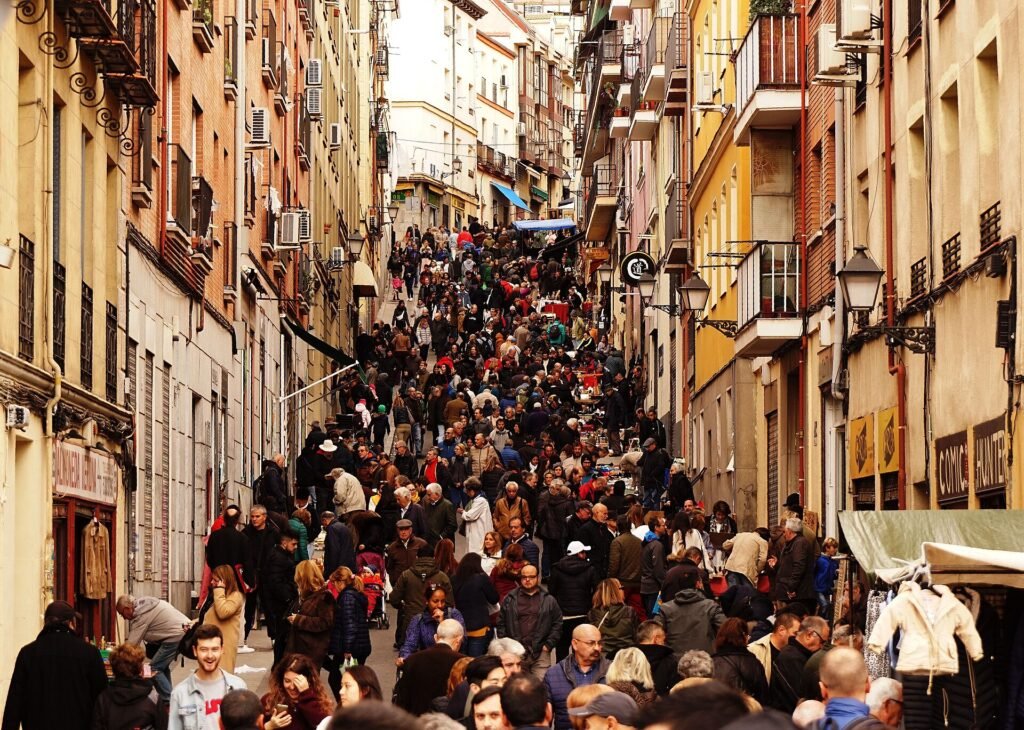
Enter at Plaza de Cascorro while the main slope is still manageable, then follow Ribera de Curtidores only long enough to understand the market’s scale. The best browsing is often one turn away: General Vara del Rey for antiques and specialist stalls, Carlos Arniches for long-established shops, and the Piquer or Nuevas Galerías courtyards for a more structured look at furniture and collectibles.
By late morning, move west toward Plaza de la Cebada and the older squares of La Latina. This prevents the visit from becoming a single downhill crowd. Finish near Plaza de la Paja, Cava Baja or Las Vistillas depending on whether food, shade or a view matters most. Mercado de San Miguel is a nearby but separate Austrias stop; add it only if you still want another busy food hall.
How El Rastro works: stalls, permanent shops and antiques
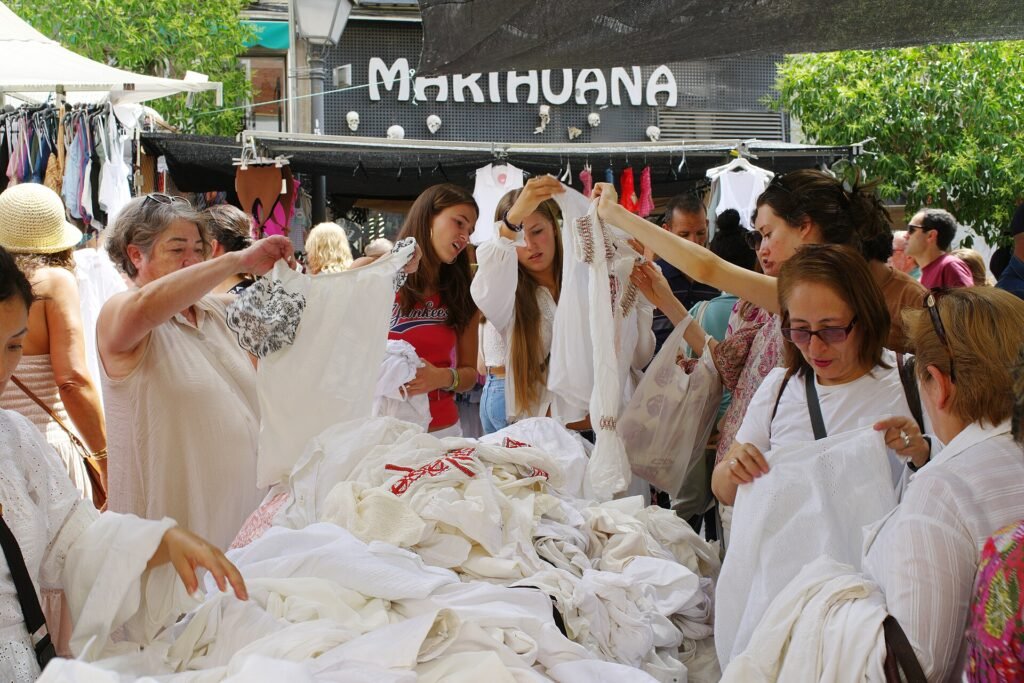
El Rastro is both the Sunday street market and a district of permanent specialist shops. Street stalls sell new and second-hand clothing, household goods, prints, accessories and curiosities, while nearby stores focus on photography, outdoor equipment, antiques and design. The most interesting object is not always the cheapest, and age or authenticity should never be assumed from presentation alone.
Ask the price before handling a delicate item, inspect condition in daylight and agree on payment before a seller wraps anything. Polite bargaining may be possible with some independent sellers, but aggressive haggling over a low-priced object is poor form. Keep a receipt for valuable purchases and understand airline or customs restrictions before buying blades, antiques, animal products or oversized objects.
Crowds, bags and a calmer way to browse
The market becomes compressed around the central slope and entrances. Wear a closed cross-body bag or keep a backpack in front, separate cards from a small amount of cash and avoid placing a phone on an outside pocket while examining merchandise. Most visits are uneventful; the point is to remove easy opportunities when attention is naturally on stalls.
If the centre of Ribera de Curtidores feels uncomfortable, step into a side street rather than pushing against the flow. Families should agree on a meeting point before entering. Travelers with limited mobility will find the earlier hour significantly easier, but the slope and uneven surfaces remain. A market does not need to be completed—leave once browsing stops being enjoyable.
Tapas after the market: how to choose a stop
La Latina fills quickly after the Sunday market, particularly along Cava Baja and the squares around Puerta de Moros. A full terrace is not proof of quality, and an empty room at noon may simply be early by Madrid standards. Read the menu, check whether portions are tapas, raciones or half portions, and ask before ordering several rich plates for a small party.
Madrid classics such as croquettes, fried squid, callos, grilled ear, anchovies and huevos rotos vary in weight and style. Balance one rich dish with vegetables or seafood and pace alcohol with water. A standing aperitif can be more enjoyable than waiting for a famous table. When dietary restrictions matter, ask about stock, frying oil and cross-contact rather than relying on a vague menu symbol.
When a guided food tour adds value
A good food tour contributes context, translation and a planned sequence of tastings—not simply access to bars anyone can enter. It can help solo visitors, first-time travelers unfamiliar with portion sizes and guests who want to learn how Madrid’s taverns differ from market halls. Check the exact neighbourhood, number of stops, drinks, dietary support and group size before booking.
Do not assume every search result stays in La Latina. Some Madrid food tours focus on Sol, the Austrias quarter, Chueca or Literary Madrid. That can still be worthwhile, but it is a different route. The comparison box below displays live options; open each itinerary and meeting point. A high rating does not replace a menu that fits your diet or a start time that works after El Rastro.
Recommended experiences
Compare Madrid tapas and food tours
A guide can add food history and translation. Check the exact neighborhood, tastings, drinks and dietary support because not every Madrid food tour visits La Latina.
Affiliate booking: GoTripSteps may earn a commission if you book, at no extra cost to you. Availability and prices are supplied by GetYourGuide.
Is La Latina worth visiting when El Rastro is closed?
Yes. Without the street market, the medieval street pattern, parish squares, Cebada market area and viewpoints become easier to read. Permanent Rastro shops still operate on their own schedules, and La Latina’s restaurants are less concentrated into one Sunday wave. A weekday afternoon can be a better choice for architecture, photography and a quiet route toward San Francisco el Grande.
The trade-off is that the iconic market atmosphere is absent and some businesses close between services. Check individual opening hours, particularly on Monday. Use La Latina metro, Puerta de Toledo or a walk from Plaza Mayor according to the route. The district is central enough to combine with the Austrias quarter without treating them as the same neighbourhood.
Accessibility, families and neighborhood etiquette
Ribera de Curtidores slopes and becomes densely packed, while side streets include cobbles and dropped kerbs of varying quality. Wheelchair users and visitors with limited stamina should arrive near opening time, use wider edges and avoid the midday bottleneck. Confirm accessible toilets and step-free dining separately. A taxi drop near the upper or lower edge can shorten the steepest section.
Keep doorways, residential entrances and narrow pavements clear. Do not photograph individual sellers or customers at close range without permission. Dispose of food waste properly and move away from crowded bar doors after finishing. La Latina is a lived-in district whose Sunday popularity affects residents; visiting considerately is part of the experience, not an optional extra.
Frequently asked questions
What days is El Rastro open?
El Rastro currently operates on Sundays and public holidays, generally from 09:00 to 15:00. Permanent district shops keep their own schedules.
What time should I visit El Rastro?
Arrive before 11:00 for easier browsing. Midday offers the strongest atmosphere but also the densest crowds.
Is La Latina only worth visiting on Sunday?
No. Weekdays are better for a calmer look at the historic streets, squares, permanent shops and restaurants, though the street market is absent.
Do I need a food tour in La Latina?
No. Independent tapas hopping is straightforward. A tour is most useful for cultural context, translation, dietary planning and a structured set of tastings.
Continue planning Madrid
Plaza Mayor guide · Madrid neighborhood food guide · Spanish regional food guide · First-time Madrid itinerary
Official planning sources
Opening hours, access rules, exhibitions and transport arrangements can change. Recheck the linked official source shortly before travelling.