Tarragona’s Roman remains are woven into a modern coastal city rather than isolated in one park. The amphitheatre uses the Mediterranean as a backdrop, the circus survives beneath later streets and the old city preserves the outline of the provincial forum. A good route reads these layers together.
QUICK VERDICT
Follow Roman topography, not only monument entrances
The strongest experience comes from understanding levels: sea, amphitheatre, circus and upper city. Combine interiors with streets and viewpoints that reveal how later Tarragona reused Roman structure.
At a glance
- Best for: Roman archaeology, coastal views and layered urban history
- Time needed: One full day; a weekend with the cathedral and nearby aqueduct
- Plan first: Check the city museum pass, monument closures and seasonal opening hours
Architecture and landmarks at a glance
| Landmark | What to notice | Planning approach |
|---|---|---|
| Roman Amphitheatre | Arena, sea-facing setting and later religious remains | Visit in clear daylight and check access status |
| Circus and Praetorium | Vaulted circulation, chariot-racing footprint and city views | Allow time for stairs and underground passages |
| Part Alta | Roman forum geometry beneath medieval streets | Walk slowly and use interpretation maps |
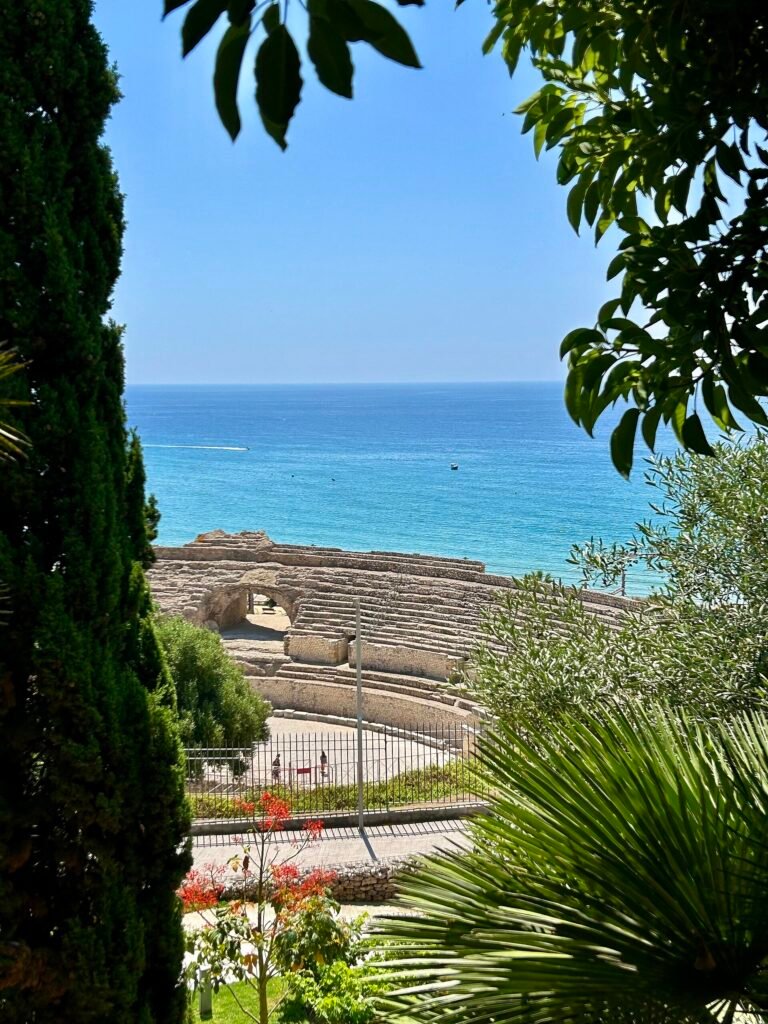
The amphitheatre belongs to its landscape
The arena sits between the upper city and the Mediterranean, making topography part of the monument. Spectators descended from the city while the sea provided an unforgettable edge.
Later religious structures occupy the arena, adding another chronological layer. View the site from above before entering so that its shape and position remain clear.
The circus survives beneath the city
Tarragona’s circus once occupied a vast space for chariot racing, but later construction absorbed its walls and vaults. The surviving passages demonstrate how ancient infrastructure can remain active inside a newer city.
The Praetorium and accessible vaults involve stairs and enclosed spaces. Move carefully and use the official plan to connect fragments that appear separate at street level.
Recommended experiences
See guided visits and ticket options
Compare current tours, entry options and meeting points, then read the supplier conditions before booking.
Affiliate booking: GoTripSteps may earn a commission if you book, at no extra cost to you. Availability and prices are supplied by GetYourGuide.
Part Alta preserves Roman scale indirectly
The upper old city follows major lines of the provincial forum even where visible Roman architecture has disappeared. Medieval and modern façades therefore sit on an inherited urban framework.
Walking the perimeter and gates is essential. Archaeology becomes a pattern in street width, terraces and retaining walls rather than a collection of display cases.
Plan for weather and closures
Coastal sun and wind can be strong, and exposed sites offer limited shade. Begin outdoors early, keep water available and use museums or lunch during the hottest period.
Archaeological conservation may close specific areas. Check the municipal heritage pages shortly before travel rather than assuming every monument in an old itinerary is open.
Practical checklist
- Start with an upper viewpoint over the amphitheatre.
- Use the municipal monument pass if it matches your schedule.
- Wear shoes suitable for stairs and stone passages.
- Add the old-city streets between ticketed sites.
Frequently asked questions
Can Roman Tarragona be visited in one day?
Yes. Focus on the amphitheatre, circus and Part Alta, then add museums only if schedules allow.
Is Tarragona an easy trip from Barcelona?
Rail connections make it practical, but confirm the arrival station and walking route to the historic centre.
Do I need a combined monument ticket?
It can be useful if several municipal sites are open during your visit. Compare current inclusions and hours first.
Continue planning your Spain trip
Girona day trip · Barcelona itinerary · Catalonia road-trip guide
Opening hours, access rules, restoration work and ticket conditions can change. Check the monument or city tourism website shortly before your visit.
Planning reference: Tarragona Tourism — Praetorium and Circus.
Featured photograph: Andreamarrano / Wikimedia Commons (CC BY 4.0).