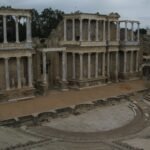
Medina Azahara is not a decorative side trip from Córdoba. The terraced palace-city was a statement of caliphal authority, administration and landscape control. Its remains are fragmentary, so a good visit depends on understanding the plan before walking among walls and reconstructed arches.
QUICK VERDICT
Begin with the museum, then read the site from top to bottom
The museum supplies the context that the ruins cannot provide alone. Follow with the shuttle to the archaeological area and trace how hierarchy, ceremony and service movement were organised across the terraces.
At a glance
- Best for: Islamic urbanism, archaeology and visitors willing to imagine from evidence
- Time needed: Half a day from Córdoba including transport and museum time
- Plan first: Confirm transport, museum opening and the shuttle arrangement to the ruins
Architecture and landmarks at a glance
| Landmark | What to notice | Planning approach |
|---|---|---|
| Site museum | Models, objects and the political purpose of the caliphal city | Visit before the ruins whenever possible |
| Upper terraces | Hierarchy, controlled access and views across the Guadalquivir landscape | Follow the marked route rather than searching for shortcuts |
| Reception halls and gardens | Ceremonial space, water and reconstructed decorative fragments | Use plans to distinguish evidence from restoration |
A city designed to make power visible
The palace-city was established under Abd al-Rahman III below the Sierra Morena. Terraces separated the caliph, administration and residential or service zones. Architecture and landscape worked together: approaching visitors would have understood rank before entering any hall.
The site was occupied for a relatively short period and later dismantled. That history explains both its archaeological importance and its apparent incompleteness. Walls at ground level can still reveal routes, thresholds and unequal access.
What the museum adds to the ruins
Models make the scale and terraced organisation legible, while carved fragments show a level of finish that open-air remains cannot communicate. Spend time with the building sequence before boarding the site shuttle.
The museum also explains excavation and conservation. That matters because reconstructed arches and displayed fragments can otherwise look like intact survivals rather than carefully interpreted evidence.
Recommended experiences
See guided visits and ticket options
Compare current tours, entry options and meeting points, then read the supplier conditions before booking.
Affiliate booking: GoTripSteps may earn a commission if you book, at no extra cost to you. Availability and prices are supplied by GetYourGuide.
Walking the archaeological route
Follow the official direction and look back repeatedly. The difference between a court, service lane and ceremonial approach becomes clearer when seen in relation to the slope. Shade is limited, so summer heat can shorten attention quickly.
Do not expect the dense decoration of the Mezquita-Catedral. Medina Azahara rewards visitors who enjoy plans, spatial hierarchy and the relationship between buildings and terrain.
Getting there without losing the morning
The site lies outside central Córdoba. Organised transport or a taxi simplifies the day; driving provides flexibility but still requires using the visitor shuttle between museum and ruins. Check current arrangements before departure.
Keep the city monuments for another block of time. Returning from Medina Azahara directly into a rushed Mezquita slot is possible but leaves little margin for transport disruption.
Practical checklist
- Visit the museum before the archaeological area.
- Carry water, a hat and sun protection in warm months.
- Download or photograph the site plan for reference during the walk.
- Leave a transport buffer before any timed Córdoba monument booking.
Frequently asked questions
Is Medina Azahara inside Córdoba?
No. The archaeological complex is west of the city, so visitors must plan transport rather than treating it as a central walking sight.
Should I see the museum or ruins first?
The museum first is usually more rewarding because its models and objects make the fragmentary architecture easier to understand.
Is Medina Azahara worth visiting after the Mezquita?
Yes. The sites explain different scales of caliphal Córdoba: the congregational mosque in the city and a purpose-built palace-administration complex beyond it.
Continue planning your Spain trip
Córdoba one-day guide · Mezquita-Catedral visitor guide · Andalusia transport options
Opening hours, access rules, restoration work and ticket conditions can change. Check the monument or city tourism website shortly before your visit.
Planning reference: Córdoba Tourism — Medina Azahara.
Featured photograph: R Prazeres / Wikimedia Commons (CC BY-SA 4.0).