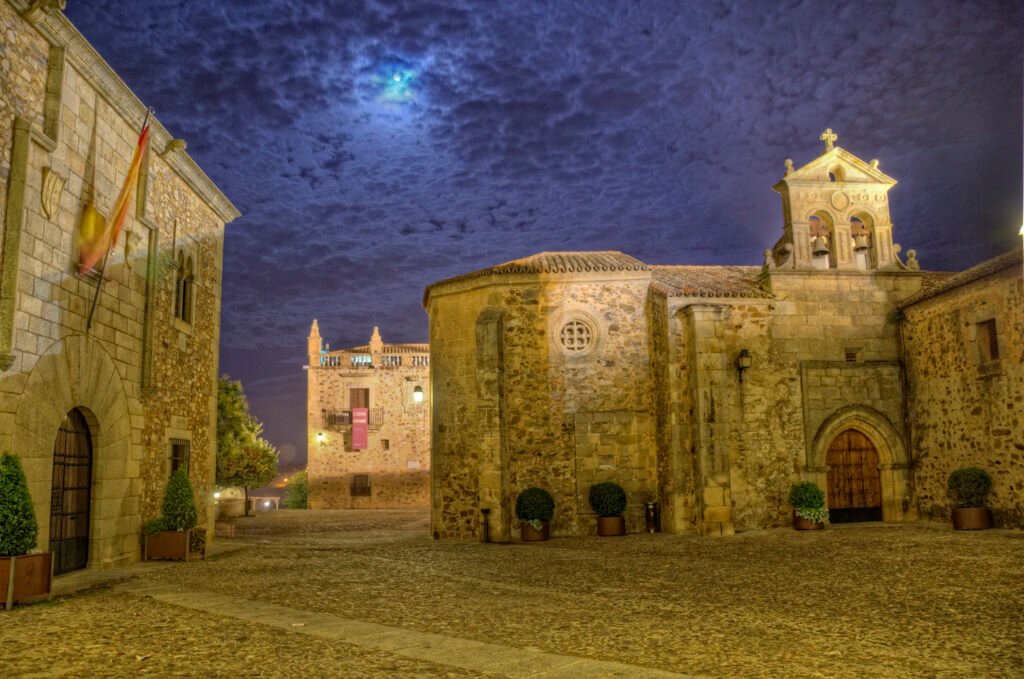
Cáceres has no single monument that explains the city. Its power lies in the ensemble: fortified houses, Renaissance façades, towers, churches and irregular lanes built from similar warm stone. A careful loop through the monumental quarter reveals architecture designed for noble rivalry as much as urban beauty.
QUICK VERDICT
Treat Cáceres as an ensemble, not a checklist
Walk slowly from Arco de la Estrella through Santa María and San Jorge, comparing façades and defensive details. The atmosphere is strongest early or after day visitors leave.
At a glance
- Best for: Stone palaces, medieval lanes, towers and quiet evening walks
- Time needed: Half a day; one night for the illuminated old town
- Plan first: Check tower and palace interior hours because they vary by day and season
Architecture and landmarks at a glance
| Landmark | What to notice | Planning approach |
|---|---|---|
| Arco de la Estrella | Ceremonial threshold between Plaza Mayor and the old town | Begin here to understand the change in urban space |
| Plaza de Santa María | Palaces, cathedral and noble façades in one ensemble | Circle the square before entering buildings |
| Plaza de San Jorge | Stepped public space and Jesuit church façade | Use the terraces for layered architectural views |
The entrance is a deliberate transition
Arco de la Estrella bends the route from the broad Plaza Mayor into a tighter world of stone. The angled passage manages movement while creating a theatrical first view of the monumental quarter.
Pause before and after the arch. The contrast between commercial square and aristocratic interior city explains more than a list of construction dates.
Palaces communicate status through restraint
Many façades appear severe at first: flat walls, heraldic shields, corner windows and towers. Details carry the message, so look for coats of arms, reused elements and subtle changes in masonry.
Defensive features survived even as residences became more comfortable and ceremonial. This tension between fortress and palace gives Cáceres its distinctive character.
Recommended experiences
See guided visits and ticket options
Compare current tours, entry options and meeting points, then read the supplier conditions before booking.
Affiliate booking: GoTripSteps may earn a commission if you book, at no extra cost to you. Availability and prices are supplied by GetYourGuide.
Squares organize the architectural walk
Plaza de Santa María gathers the cathedral and major noble houses, while San Jorge uses stairs and façades to create a more dramatic stage. The lanes between them provide compression and surprise.
Rather than following the fastest route, loop through side streets and return from a different direction. The city is compact enough to reward small detours.
Evening changes the old town
When stone is illuminated and crowds thin, towers and façades become more sculptural. An overnight stay allows this experience without rushing for onward transport.
Keep residential streets quiet and avoid treating doorways as photo sets. Cáceres remains a lived city, not an empty historical backdrop.
Practical checklist
- Wear shoes suited to polished, uneven stone.
- Check small monument schedules on the official tourism site.
- Return after sunset for a quieter atmosphere.
- Respect residential entrances and narrow passages.
Frequently asked questions
Is Cáceres Old Town free to enter?
The streets and squares are public. Individual towers, museums and palace interiors may charge admission.
How long does the old town take?
Allow at least three hours for a slow walk and selected interiors. A full day is more relaxed.
Do I need a car in Cáceres?
Not for the historic centre. A car can be useful for a wider Extremadura itinerary, but park outside the pedestrian core.
Continue planning your Spain trip
Roman Mérida guide · Northern Spain road-trip planning · Salamanca city guide
Opening hours, access rules, restoration work and ticket conditions can change. Check the monument or city tourism website shortly before your visit.
Planning reference: Cáceres Tourism.
Featured photograph: Francisco Rodriguez / Wikimedia Commons (CC BY 3.0).