Barrio de Salamanca is more than luxury retail: its nineteenth-century grid, mansion façades, National Archaeological Museum, small foundations and restaurant streets make a strong half-day east of the centre. Walk from Colón through Serrano and Ortega y Gasset, then finish around Goya or Jorge Juan according to your interests.
Affiliate disclosure: this independently researched guide contains a clearly labelled booking option. The advice remains useful if you book directly or do not book at all.
QUICK ANSWER
Use the Golden Mile as the spine, not the entire purpose
Three to five hours is enough for architecture, one museum and a café or lunch. Shoppers can extend the route, while culture-focused visitors should prioritise the National Archaeological Museum or Lázaro Galdiano collection. The regular grid makes navigation easy but blocks are longer than they appear. A private architecture or city tour is optional and should explicitly name Salamanca in its route.
At a glance
| Best start | Colón or Serrano metro for the western edge and museum cluster. |
|---|---|
| Route | Colón → Serrano → Ortega y Gasset → Claudio Coello or Lagasca → Goya/Felipe II. |
| Ideal duration | 3–5 hours with one museum; longer for serious shopping. |
| Best for | Architecture, design, museums, window-shopping and a calmer urban walk. |
| Accessibility | The grid and broad pavements help, but shop thresholds, traffic crossings and individual museums vary. |
A practical Barrio de Salamanca walking route
Begin at Plaza de Colón, where the National Archaeological Museum and National Library create a cultural entrance to the district. Walk north or east along Serrano, turn through Ortega y Gasset and then use Claudio Coello or Lagasca for smaller-scale façades and shops. Finish around Goya and Plaza de Felipe II, or loop back via Jorge Juan for restaurants and terraces.
The grid was planned in the nineteenth century as an expansion beyond old Madrid, which explains the straight streets and consistent blocks. Look above shopfront level: bay windows, ironwork, portals and corner treatments reveal more than the global brand names. Cross at signals and do not underestimate distance; a route that looks like five blocks may be a twenty-minute walk with stops.
Read the nineteenth-century expansion in the façades
The district developed under the Marquis of Salamanca during Madrid’s nineteenth-century expansion, with housing aimed at aristocratic and bourgeois residents. Its regular plan contrasts with the irregular lanes of Austrias and La Latina. Original mansions, later apartment buildings and modern commercial interiors now coexist, so the walk becomes a lesson in how a prestigious residential quarter adapts to retail and offices.
Pause at building corners rather than racing from boutique to boutique. Decorative stone, enclosed balconies and carriage entrances make more sense when viewed across a junction. Many properties remain private; admire entrances from the pavement and do not enter courtyards without permission. An architecture tour should explain urban development, not merely point at expensive stores.
Choose one museum or cultural foundation
The National Archaeological Museum is the broadest choice, with Iberian, Roman, medieval and other collections in a renovated building beside Colón. The Lázaro Galdiano Museum offers a more intimate private collection in a mansion farther north. Fundación Juan March is valuable for temporary art exhibitions and chamber music, while smaller galleries cluster around Villanueva and nearby streets.
Check the current programme before deciding. A free foundation exhibition may provide a better one-hour cultural stop than forcing a large museum into a shopping day. The Archaeological Museum deserves several hours when it is the main purpose. Do not add it as a thirty-minute afterthought. Accessible entrances and bag policies differ, so use the institution’s own visitor page.
Golden Mile shopping without purchase pressure
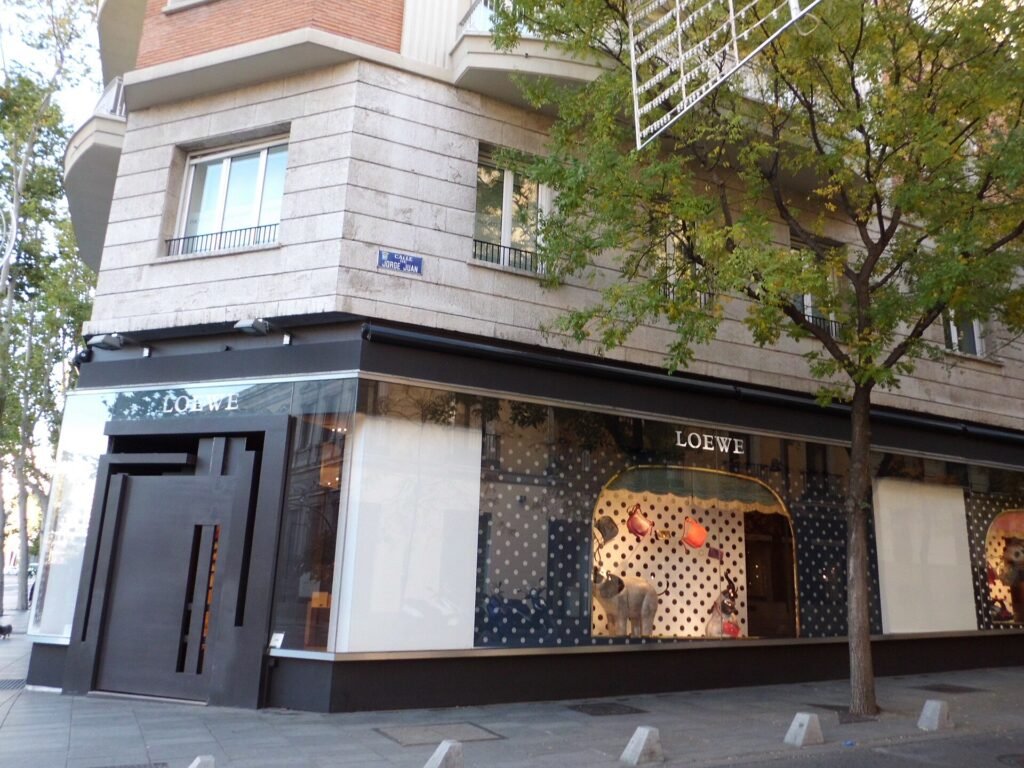
Ortega y Gasset and Serrano carry international luxury houses, while Claudio Coello, Lagasca and side streets mix Spanish designers, jewellery, beauty and smaller boutiques. Window-shopping is completely legitimate. Security staff and appointment systems are normal at some stores. If you intend to buy, compare return policy, tax documentation and warranty before using a large part of the travel budget.
Carry identification only as needed and keep high-value purchases discreet. VAT refund eligibility depends on residence and export conditions, not the sales assistant’s shorthand. Use official forms and leave enough airport time if validation is required. A discount sign does not prove value; compare the same product and understand currency conversion before accepting dynamic currency pricing.
Where the route slows down for food and coffee
Jorge Juan, Puigcerdá and the streets around Goya provide a dense restaurant and terrace zone, but the district spans a wide price range. Check the menu posted outside, lunch service and reservation requirements instead of assuming every elegant room is formal. A café or bakery stop can be enough before continuing to Retiro or the Archaeological Museum.
For a simpler meal, move one or two streets away from the most photographed terraces. Local residents use ordinary bars and market halls as well as destination restaurants. Dietary needs should be communicated directly, especially with tasting menus. Dress codes are uncommon at daytime cafés but may apply at specific clubs or evening venues; check rather than generalising about the whole district.
When a guide adds value in Salamanca
A guide is useful for architectural history, private-gallery context or a route that connects Salamanca with Castellana and Retiro. The live booking comparison below uses a focused search, but product results can shift. Open the itinerary and confirm that Salamanca, Serrano or the Golden Mile is explicitly included. A generic “Madrid highlights” drive may pass the district without interpreting it.
Private tours can adapt pace and reduce standing, but ask about step-free access and vehicle entry if mobility is the reason for booking. Do not pay for a shopping tour that earns commissions from stores unless that relationship is clearly disclosed. The most trustworthy guide helps you understand the district even if you purchase nothing.
Recommended experiences
Compare private tours that include Barrio de Salamanca
Open each live itinerary and confirm that Salamanca, Serrano or the Golden Mile is explicitly included before booking.
Affiliate booking: GoTripSteps may earn a commission if you book, at no extra cost to you. Availability and prices are supplied by GetYourGuide.
Accessibility and where to go next
Broad pavements and a regular grid generally help navigation, but traffic crossings are long and some older shops have steps. Plan a shorter line between Colón, Serrano and Goya rather than covering the whole district. The National Archaeological Museum advertises strong accessibility; smaller galleries and private premises need direct confirmation. Public seating is less frequent than in a park, so schedule café pauses.
From the southern edge, Puerta de Alcalá and Retiro are natural next stops. From Colón, continue along Castellana toward Chamberí or the Bernabéu area. Goya provides metro connections back to the centre. Avoid stacking a long museum, serious shopping and Retiro into one afternoon; choose two and leave the third for another day.
Frequently asked questions
Is Barrio de Salamanca only for luxury shopping?
No. It also offers nineteenth-century architecture, the National Archaeological Museum, cultural foundations, galleries and a strong restaurant scene.
How long do you need in Barrio de Salamanca?
Allow three to five hours for a walk, one cultural stop and a café or lunch. Add more time for serious shopping or the Archaeological Museum.
What is Madrid’s Golden Mile?
The luxury-shopping axis is centred on streets such as Ortega y Gasset, Serrano and nearby Claudio Coello in Barrio de Salamanca.
What metro stop is best for Barrio de Salamanca?
Colón or Serrano suits the western route; Goya and Velázquez are useful farther east. Choose by your first museum or street.
Continue planning Madrid
El Retiro park guide · Prado Museum planning · Bernabéu visitor guide · Madrid neighborhood dining
Official planning sources
Opening hours, access rules, exhibitions and transport arrangements can change. Recheck the linked official source shortly before travelling.