Malasaña is more useful than its nightlife reputation suggests: in one walk you can connect the history of Plaza del Dos de Mayo, independent shops, small cafés and the calmer courtyards of Conde Duque. Start in daylight, keep the route compact and add a performance only if you still want a structured evening.
Affiliate disclosure: this independently researched guide contains a clearly labelled booking option. The advice remains useful if you book directly or do not book at all.
QUICK ANSWER
Walk Malasaña for texture, then slow down in Conde Duque
The strongest route moves from Tribunal through Dos de Mayo and San Ildefonso before crossing toward the Conde Duque cultural centre and Plaza de las Comendadoras. Three to five hours is enough without shopping; a later flamenco show can turn it into a full day. Visitors focused only on late-night bars miss much of the architecture, retail and neighbourhood history.
At a glance
| Best start | Tribunal metro for Malasaña, or Plaza de España for a reverse Conde Duque route. |
|---|---|
| Walking time | About 45–60 minutes of movement; allow 3–5 hours with shops, coffee and culture. |
| Best period | Late morning through early evening; many independent businesses open later than commuters expect. |
| Night option | Small music venues and Tablao Ópera Flamenca between Conde Duque and Malasaña. |
| Accessibility | Distances are short, but narrow pavements, thresholds and busy squares vary by street and venue. |
A practical Malasaña and Conde Duque route
Begin at Tribunal and move west through the neighbourhood rather than zigzagging between every saved café. Use Plaza del Dos de Mayo as the first anchor, continue through the smaller streets around San Ildefonso, then cross San Bernardo toward Conde Duque. Finish at the cultural centre and Plaza de las Comendadoras, where the pace is calmer and Plaza de España is an easy onward connection.
The route is compact enough to improvise, but opening patterns matter. Vintage shops and galleries may not open early, while bars transform the same streets after dark. Arrive around 11:00 or noon for a balanced day. If your priority is a scheduled exhibition or show, check that event first and place wandering around it rather than treating every listed shop as permanent.
Plaza del Dos de Mayo and the history behind the name
Malasaña takes its name from Manuela Malasaña, associated with the Madrid uprising of 2 May 1808. The central square preserves an arch connected with the former Monteleón artillery barracks and a monument to Daoíz and Velarde. Read the square as a civic memory site before reading it as an outdoor bar zone; the history explains street names and local identity throughout the district.
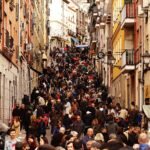
The square can be lively, messy and crowded, especially on warm evenings. That is part of its present-day use, not a staged attraction. Visit earlier for architecture and context, then return only if the social atmosphere suits you. Keep bags closed when terraces are busy and avoid photographing residents or children as though the neighbourhood were an event set.
Vintage shops, books and cafés without chasing a checklist
Independent retail clusters around Fuencarral, Velarde, Espíritu Santo, Corredera Alta and the streets near Dos de Mayo. Stock and tenants change, so look for categories—vintage clothing, comics, records, small design objects—rather than building the day around one old recommendation. Check prices and condition carefully; “vintage” does not guarantee age, rarity or sustainable sourcing.
Use a café as a pause, not a destination queue. Malasaña has compact specialty cafés and bakeries, while Conde Duque offers quieter squares and traditional taverns. If a popular doorway is full, walk five minutes. The neighbourhood’s value lies in the density of alternatives. Order at the rhythm of the business, keep laptops out of limited tables during peak periods and remember that terrace seating may cost more.

Conde Duque: from royal barracks to cultural centre
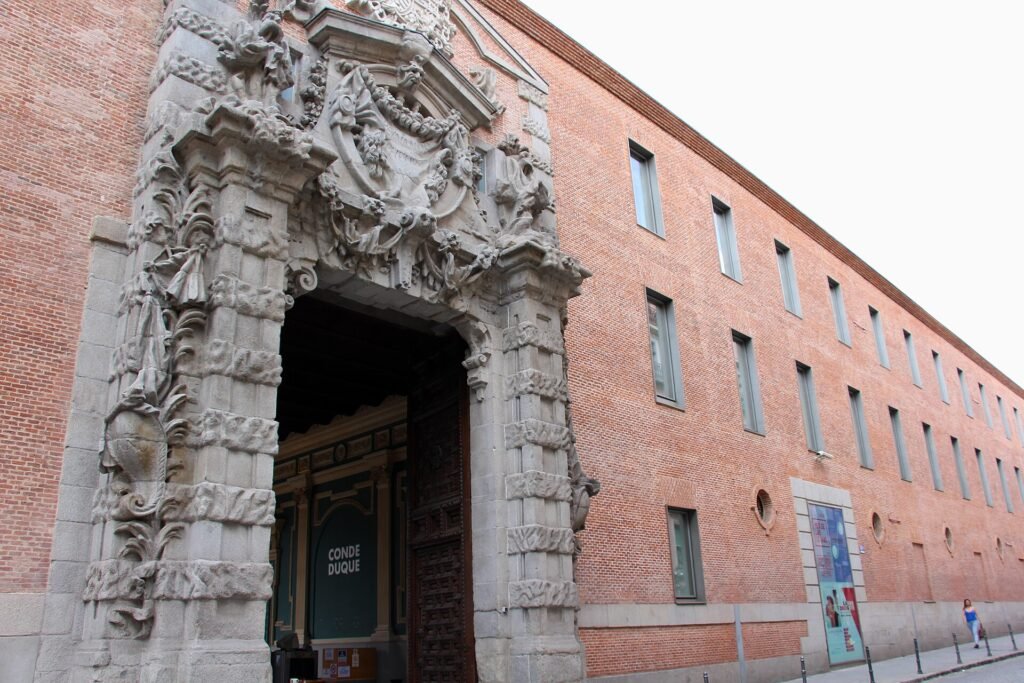
The long brick complex began as the Royal Guard Corps barracks, designed in the eighteenth century by Pedro de Ribera. Today it supports archives, libraries, exhibitions and performance spaces. The courtyard and exterior explain the scale even when no ticketed event fits your schedule. Check the official programme because individual halls keep different hours and some spaces close between installations.
Conde Duque is also a useful change in rhythm after Malasaña. Plaza de las Comendadoras and the surrounding lanes feel more residential, and the area connects easily to the Liria Palace zone or Plaza de España. Respect quiet courtyards and church entrances. An Instagram location is still someone’s street, and late-night noise is a real neighbourhood issue.
Adding Tablao Ópera Flamenca to the evening
Tablao Ópera Flamenca sits between Conde Duque and Malasaña, making it a logical evening extension rather than a cross-city detour. The linked performance currently runs about an hour. That compact format works after a neighbourhood day, but read whether the selected option includes a drink or food and how seating is allocated. Arrive early enough to find the doorway without rushing.
Recent verified-booking feedback emphasizes the intimate room, powerful dancing and live music. Some travelers say the hour feels short, which is useful expectation-setting rather than a defect for every visitor. Choose it when you want a concise show; select a longer dinner tablao elsewhere when the meal and extended evening are equally important.
Live availability
Check Tablao Ópera Flamenca show availability
Choose a live show time and review the current seat terms and inclusions before booking.
Affiliate booking: GoTripSteps may earn a commission if you book, at no extra cost to you. Availability and prices are supplied by GetYourGuide.
Food and nightlife: keep the plan flexible
Malasaña mixes traditional bars, vegetarian kitchens, international food and late-night venues in a few blocks. That variety is more useful than any single “best” list. Read the current menu, check kitchen hours and walk away from aggressive promoters. For a quieter meal, Conde Duque and the Comendadoras area often feel less compressed than streets immediately around Dos de Mayo.
At night, small venues may have door policies, ticketed events or age restrictions. Keep identification, monitor your drink and use official transport home. The Metro does not run all night; Madrid’s night buses follow different routes. A neighbourhood guide should not imply that every street feels identical at 02:00. If the atmosphere becomes uncomfortable, move to a main road and order a licensed taxi or ride through its official app.
Accessibility and local etiquette
The central plazas and renovated cultural centre provide useful resting points, but historic shop thresholds and narrow pavements are inconsistent. Travelers using wheelchairs should check the specific Conde Duque entrance and event room, then select cafés with level access rather than assuming every ground-floor business is step-free. The route can be shortened by starting at Noviciado or Plaza de España.
Keep groups compact on narrow streets, avoid blocking residential doors and move conversations away from bedroom windows late at night. Street art and shop displays are not permission to enter private courtyards. Buy from independent businesses when something genuinely appeals to you, not as a performance of “living like a local.” Good neighbourhood travel is curious, quiet where needed and willing to leave space.
VERIFIED-BOOKING THEMES
What recent travelers mention
- Visitors often praise the intimate venue and the intensity of the dancing and live music.
- The compact show is frequently described as good value for a focused cultural evening.
- Some travelers would prefer a longer running time, so treat the one-hour format as a deliberate choice.
These are recurring themes summarized from verified-booking feedback visible on the linked GetYourGuide product page on 2 November 2026. They are not quotations, a site endorsement or a substitute for checking the newest reviews.
Frequently asked questions
How much time do you need in Malasaña?
Allow three to five hours for a relaxed route through Dos de Mayo, shops, cafés and Conde Duque. Add a separate evening block for a show or nightlife.
Is Malasaña only a nightlife district?
No. Its history, independent retail, cafés and cultural spaces are easier to appreciate in daylight. Nightlife is one layer of the neighbourhood.
What is the best metro for Malasaña?
Tribunal is a convenient start for Plaza del Dos de Mayo. Noviciado and San Bernardo help with the western side, while Plaza de España suits Conde Duque.
Is Malasaña wheelchair accessible?
The route is compact, but pavements, shop thresholds and crowded squares vary. Check individual venues and use renovated cultural entrances where possible.
Continue planning Madrid
First-time Madrid planning · Temple of Debod nearby · Plaza Mayor guide · Madrid neighborhood dining
Official planning sources
Opening hours, access rules, exhibitions and transport arrangements can change. Recheck the linked official source shortly before travelling.