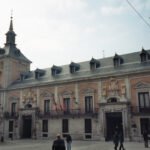
San Sebastián uses architecture to stage its relationship with the sea. Belle Époque hotels, bridges and public buildings frame elegant promenades, while the Kursaal introduces a deliberately abstract contemporary landmark at the mouth of the Urumea. The walk is as much about public space as façades.
QUICK VERDICT
Follow the coast and river instead of chasing isolated landmarks
Begin around La Concha, cross the centre and finish at the Kursaal near Zurriola. Repeated views of water explain why these buildings occupy their particular sites.
At a glance
- Best for: Belle Époque streets, seafront design and contemporary cultural architecture
- Time needed: Three hours; a full day with interiors and pintxos stops
- Plan first: Check weather, festival closures and any Kursaal public programme
Architecture and landmarks at a glance
| Landmark | What to notice | Planning approach |
|---|---|---|
| La Concha promenade | Ornamental railings, beach curve and hotel skyline | Walk in daylight and at low-crowd hours |
| City centre and bridges | Belle Époque public architecture and river crossings | Use a slow route along the Urumea |
| Kursaal | Rafael Moneo’s translucent volumes and coastal setting | View in daylight and after illumination |
La Concha is a designed urban room
The bay’s natural curve is reinforced by promenade, railings, gardens and the continuous city edge. Architecture works collectively, producing a formal resort landscape rather than a line of unrelated buildings.
Walk enough of the curve to see how view, beach and skyline change. The famous railing matters because it repeats across the entire public experience.
Belle Époque confidence shapes the centre
Theatres, hotels, bridges and civic buildings reflect San Sebastián’s growth as a fashionable resort. Façades use symmetry, stone and decorative metalwork to establish an elegant public identity.
Look above contemporary shopfronts and compare corner buildings. The architectural quality is distributed across streets, not confined to ticketed monuments.
Recommended experiences
See guided visits and ticket options
Compare current tours, entry options and meeting points, then read the supplier conditions before booking.
Affiliate booking: GoTripSteps may earn a commission if you book, at no extra cost to you. Availability and prices are supplied by GetYourGuide.
The Kursaal changes the coastal language
Rafael Moneo’s two large volumes avoid imitating the historic city. Their translucent surfaces and slightly shifted geometry respond to the river mouth, beach and changing coastal light.
Approach from several bridges and from Zurriola. The building can feel severe at noon and lantern-like after dark, so a repeat visit is worthwhile.
Weather is part of the architecture walk
Rain, wind and sea conditions change reflections and comfort quickly. Carry a compact layer and identify indoor stops rather than abandoning the route at the first shower.
San Sebastián is compact and well suited to walking. A car adds little in the centre, while public transport is useful for accommodation farther from the bay.
Practical checklist
- Walk La Concha early for clearer views.
- Look above shopfront level in the centre.
- Return to the Kursaal after dark.
- Carry rain protection even when the forecast looks moderate.
Frequently asked questions
Where is the best Belle Époque architecture in San Sebastián?
The La Concha edge, central boulevards, civic buildings and bridges around the Urumea form the strongest continuous route.
Can visitors enter the Kursaal?
Public access depends on events, exhibitions and current programming. The exterior and surrounding terraces remain important even without an event ticket.
Is this route suitable in rain?
Yes with proper clothing, though exposed seafront sections may be windy. Combine them with cafés, markets or cultural interiors.
Continue planning your Spain trip
San Sebastián beaches and Monte Igueldo · San Sebastián pintxos guide · Bilbao city-break guide
Opening hours, access rules, restoration work and ticket conditions can change. Check the monument or city tourism website shortly before your visit.
Planning reference: San Sebastián Tourism — Art and Nature Walk.
Featured photograph: Ermell / Wikimedia Commons (CC BY-SA 4.0).