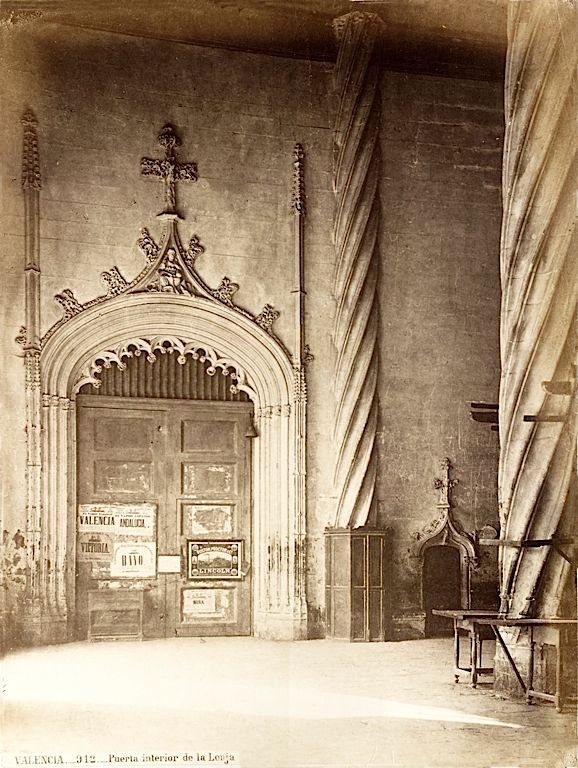
Across a busy Valencia street, two buildings explain very different commercial eras. The fifteenth-century Silk Exchange turns mercantile power into stone vaults and twisting columns, while the Central Market uses iron, ceramic and glass to organize a modern world of food and movement.
QUICK VERDICT
Visit the market early, then give the Silk Exchange quiet time
The Central Market is most alive in the morning. After exploring its structure and daily use, cross to the Lonja and slow down beneath the great columned hall.
At a glance
- Best for: Gothic civic architecture, modernist markets and local food culture
- Time needed: Two to three hours; half a day with nearby churches and old-city lanes
- Plan first: Market trading hours end earlier than many monument schedules
Architecture and landmarks at a glance
| Landmark | What to notice | Planning approach |
|---|---|---|
| Lonja de la Seda | Spiral columns, ribbed vaults, courtyard and mercantile symbolism | Enter after understanding the exterior and trading context |
| Central Market | Iron structure, domes, ceramics, glass and active stalls | Arrive in the morning and keep circulation clear |
| Plaça del Mercat | Direct urban dialogue between commerce, worship and civic power | Pause outside before crossing between buildings |
The Silk Exchange makes commerce monumental
The Contract Hall is the unforgettable space: slender twisting columns rise into ribbed vaults, turning a commercial interior into a stone grove. Proportion and repetition project confidence rather than religious mystery.
Continue to the courtyard and upper or adjoining rooms where access permits. The complex included negotiation, authority and enforcement, so its architecture is more than one photogenic hall.
The Central Market is structure in daily use
Iron spans, glazed openings and ceramic decoration produce a bright hall for hundreds of transactions. Architecture organizes circulation, ventilation and identity while remaining part of everyday Valencia.
Do not block stalls for photographs. Buy from vendors respectfully, observe opening hours and look upward from wider aisles to understand domes and roof structure.
Recommended experiences
See guided visits and ticket options
Compare current tours, entry options and meeting points, then read the supplier conditions before booking.
Affiliate booking: GoTripSteps may earn a commission if you book, at no extra cost to you. Availability and prices are supplied by GetYourGuide.
The square connects two commercial worlds
Facing buildings let visitors compare late-medieval stone craftsmanship with early twentieth-century engineering. Their different materials respond to the same need for organized public exchange.
Nearby religious architecture adds a third voice to the square. Spend a few minutes outside before entering anything; the urban relationship is one of Valencia’s clearest architectural lessons.
Timing improves both experiences
Start at the market while stalls are active, then cross to the Silk Exchange as groups begin to spread through the old city. Midday closure patterns can affect nearby smaller sites.
For lunch, avoid treating the market only as a tourist food court. Compare fresh produce and local ingredients, then choose a meal that fits the rest of your route rather than eating in a rush.
Practical checklist
- Visit the Central Market in the morning.
- Keep market aisles and vendor counters clear.
- Look at the Lonja courtyard and exterior gargoyles.
- Check special holiday trading schedules.
Frequently asked questions
Is Valencia Central Market free to enter?
The active market hall is generally free to enter during trading hours. Purchases and special activities cost separately.
How long does the Silk Exchange take?
Allow forty-five to seventy-five minutes depending on interpretation and crowds.
Can both buildings be visited together?
Yes. They face the same market square, making them one of Valencia’s easiest paired architecture visits.
Continue planning your Spain trip
Valencia old-town guide · City of Arts and Sciences · Spanish regional food guide
Opening hours, access rules, restoration work and ticket conditions can change. Check the monument or city tourism website shortly before your visit.
Planning reference: Comunitat Valenciana — Silk Exchange.
Featured photograph: Photo by Jean Laurent / Wikimedia Commons (Public domain).